Manila: An Unlikely Escape
- Uniqo Makata
- Sep 28, 2021
- 6 min read

Updated: May 1, 2024
Manila, a city located at the heart of the National Capital Region of the Philippines. The capital of the country that once dubbed the “Sick man of Asia” but is and always will be known as the “Pearl of the Orient Seas”.
There’s no better way to start our journey in one of the Philippines’ most historically significant cities but at the place symbolic of the freedom that we Filipinos enjoy today, a timeless gem that is also dubbed as “The heart of Manila” and that is Rizal Park.
Rizal Park, named after the Philippines’ national hero, Dr. Jose P. Rizal is a 58-hectare historical and leisure park located at Ermita, Manila City.
As I walk to the entrance of the park, I can’t let myself but become a skeptic as Luneta park (as it is popularly called) has been stereotyped for decades as the “dating place for indays” but the more I delve deeper inside the historic park, something slowly changes. Each step I make feels like an escape from the harsh realities that stressful urban life brings.
It is not just an escape, it is a beautiful and scenic escapade and it made me realize that the best things in life are not the ones that can be found in luxury shops or Ferrari showrooms, the best things in life just like when it comes to the Rizal Park, are the ones that give you simple yet beautiful moments especially if spent with loved ones.
Rizal Park is home to the Philippine Museum Complex which is composed of four museums namely: National Museum of Natural History (the latest one built), National Museum of Fine Arts, National Museum of Anthropology, and the most well-known, National Museum of the Philippines.
National Museum of Natural History which was opened to the public just this 2018 is a modern state-of-the-art museum designed by Architect Antonio Toledo along with the Dominic Galicia Architects team and Tina Periquet.

Upon walking to the museum, you’ll be greeted by the marvelous dome structure supported by an architecturally designed helix-like staircase known as “Tree of Life” which according to Galicia, was inspired by "natural history and man’s wanting to understand nature and his place in it".

Luneta is also home to some of the best tourist and leisure destinations, Metro Manila has to offer such as the Japanese Garden, Chinese Garden, National Planetarium, and Manila Ocean Park. The Japanese and Chinese gardens are the places to be if you are looking for luscious greeneries and serene lakeside views without spending much for travel outside the metro.
The National Planetarium, on the other hand, is the perfect dating spot for couples who are looking for that “Sun, moon, stars, and back" romantic Instagram-worthy moments brought by its awe-inspiring replicas of various celestial bodies.
While the Manila Ocean Park is perfect for families who are “in” for a one-of-a-kind “under the sea experience” as its Oceanarium attraction houses over 14,000 marine creatures from hundreds of different aquatic species.

A quarter of an hour walk from Rizal Park and you’ll reach the historic walled city of Intramuros, which means “within walls” in Spanish.
The 67-hectare historical district of Manila is home to some of the Pearl of the Orient City’s most must-see landmarks including but not limited to: Fort Santiago, Baluarte De San Diego, and Manila Cathedral.
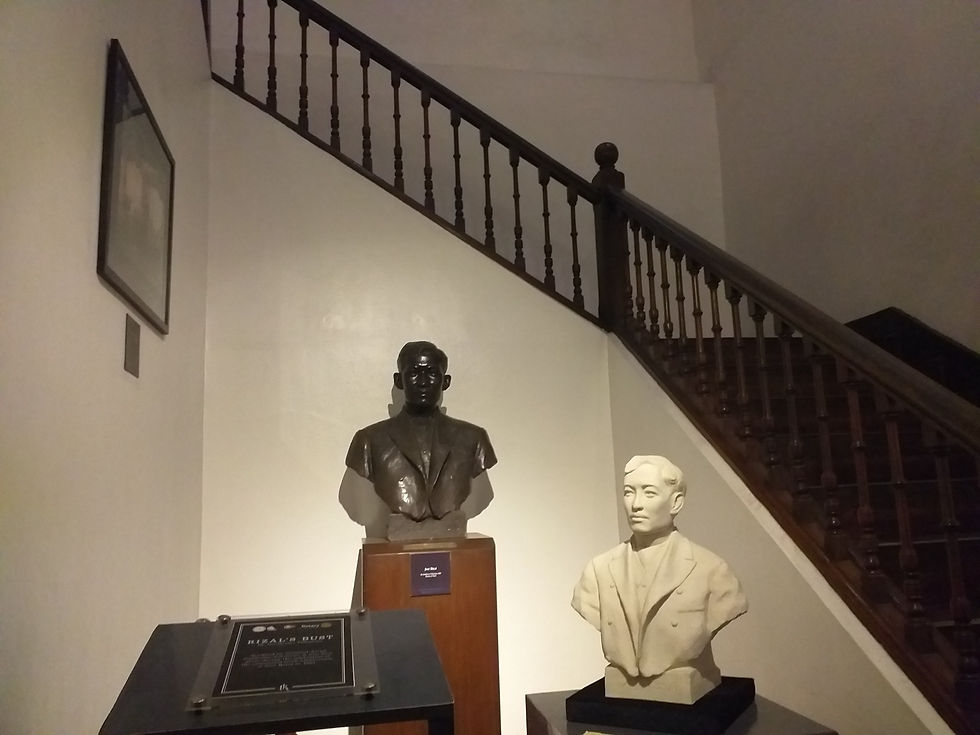
Fort Santiago houses Museo de Rizal which is the home for some of Rizal’s artworks, photographs, personal effects, and other memorabilia.
The museum is also famous for “Silid Piitan”, a living museum-like creation of Guillermo Tolentino that features the life-size wax figure of Jose Rizal and his life in prison during the last years of the Spanish Colonial Era.


Baluarte De San Diego, on the other hand, offers a picturesque spot for visitors to capture some of their once-in-a-lifetime moments.
The historical bastion which once served as a part of the fortress built to defend Intramuros against armed invaders is now known for its Al Fresco dining restaurants and captivating oasis-like garden area.
Lastly, Manila Cathedral which is known as the “Mother of All Churches” and as well as the “Premier Basilica of the Philippines” is one of the must-visit locations inside the walled city.
The night lights of Plaza De Roma, located just in front of the Basilica adds up a romantic and visually enchanting experience to a night’s walk with a special someone along the cathedral’s vicinity

As I walk along the streets of Binondo, popularly known as the Philippines’ version of Chinatown, I can’t help but let the inner ultimate foodie in me discover the food gems that the Chinese Food Mecca has to offer. From the all-time dim sum and dumplings favorites, Dongbei Dumplings and Shanghai Fried Siopao up to the instagrammable family favorites, Sincerity Tea House and Restaurant and King Chef Seafood Restaurant, there’s no way you’ll go home and not have your tummy smiling like a happy big, Jumbo siopao.
There are also bread and pastries shops that you’ll find at Binondo and among the must-visit shops are Eng Bee Tin, Ho-Land Hopia and Bakery, and Salazar Bakery. All of which are known for their delectable and irresistible Chinese pastry known to Filipinos as Hopia.
Hopia or Huo Pi Ya (which means “good pastry” in Chinese comes in different shape varieties and flavors, from the classic favorites Hopiang Kundol (Winter Melon), Hopiang Ube, and Hopiang Mongo up to the modern twist flavors, Ube Langka and Ube Pandan, you’ll surely have your tastebuds filled with sweet delight.
Aside from food, places to visit in Binondo include the famous Binondo Church and Plaza San Lorenzo Ruiz. The Plaza San Lorenzo Ruiz is an ellipse-shaped park built in honor of the first-ever Filipino saint with the same name, San Lorenzo Ruiz, it is located just a crosswalk away from Binondo Church.
The plaza has survived the grueling events that transpired in the 1945 Battle of Manila and is a testimony to the resiliency of the Filipinos and as well as to the ever-enduring bond between the Chinese and Filipinos.

Chinese culture is so engraved in the Philippine culture, up to the point that Philippine Hokkien or popularly known as Fookien was born. Fookien is the Philippine variety of the Chinese spoken language.
The city of Manila is home as well to Malacañang, a 16-hectare palace that served as the home of the country’s apex leaders from generation to generation. From President Manuel L. Quezon to the current President, Rodrigo Duterte, Malacanang has witnessed history unfold.
Not so distant from the Malacañang Palace is the University belt (Popularly known as the U-belt), which is the home to some of the country’s oldest and most well-known universities. It is also where one of the Big Four universities in PH, The University of Santo Tomas can be found.
Upon entering the Mendiola Peace Arch, one of the nearest landmarks to Malacañang, you will come across some of the well-known and historic universities in the Philippines such as Centro Escolar University, San Beda, and La Consolacion College.
For me, there is something cathartic in walking along the University Belt, all the way to Recto. Aside from the pleasure of still having my relatively old yet reliable phone with me (pun intended). I feel that as if not only that I am walking to simply “go home” but it gives me that feeling of nostalgia and that sense of wonder, being able to explore a little piece of history even in just one's simple commute to-and-fro, whether it is school or work.
Speaking of commute, there’s no better way of visiting Manila but through the LRT (Light Rail Transit) that spans from the south all the way to northern parts of the city and vice versa. Vito Cruz is the southernmost station of the LRT Line-1, whereas R.Papa is the northernmost Manila City station.

The anxiety of making one’s way to school or work before taking that final exam or taking on another stressful workday is slowly being replaced by feelings of a subtle yet growing feeling of amazement and wonderful reminisce as I glee towards the slowly-progressing yet captivatingly beautiful landmarks of Manila.
All of this while short clips from “Tube MNL”, Metro Manila’s first-ever inter-train TV network play on the LRT’s LCD screen.
Unlike the hassle and bustle of its' neighboring cities’ sprawling urban centers, the City of Manila offers workplaces, academic institutions, and historically significant establishments that boast a unique kind of charm and value.
People might say that the streets of Manila have itself stuck in the past and that it is far behind its' more modern counterparts such as the ones found in Makati, BGC (Bonifacio Global City), and Ortigas.
However, for some like me, they are things that you’ll never simply find on those urban hubs that you can only find in the Pearl of the Orient City.

An escape from the urban dystopia-vibe that the highly progressive yet stressful living in the Metro brings. For many of us, the Philippine versions of Wallstreet and GooglePlex are the dream but there are times that you simply want to find that haven, a place wherein you can learn and explore more than just simply work and play.
Never in another city you can learn more and explore, may it be walking along with the scenic views and one-of-a-kind museums of Rizal Park, taking selfies at the historical landmarks in the walled city of Intramuros, or by simply food crawling in the Filipino-Chinese town of Binondo.


Comments